Showing posts with label General fiction. Show all posts

Wednesday, June 26, 2013

Beautiful Ruins by Jess Walter


I love reading books set in faraway lands.  The second best thing to traveling is armchair traveling…and it’s sure cheaper!  So, if you, like me, are not finding yourself traveling to Italy this summer, travel along with Jess Walter and his fantastic book set in Italy, Los Angeles and Seattle.  Told in several different time periods, the Italy-portion of the book starts off in the early 1960s.  Pasquale, a lonely Italian innkeeper, has his world turned upside-down when a beautiful American actress comes to stay in his fledgling hotel.  The actress, as it turns out, is on a break from the Cleopatra (the 1963 film) set, which is filming in Rome.  The actress’ stay in the small hotel changes the lives of everyone involved…including some members of the Cleopatra crew, which is how some of the story ends up in present day Los Angeles. 

The Italian storyline in particular is filled with a plethora of imagery of coastal Italy.  Walter, in vivid detail, describes the dilapidated hotel and the even smaller, more pathetic village it sits in.  As I was reading, I felt transported to this village, just south of the Cinque Terre (very popular coastal resort towns in Italy) but not close enough to be part of that very prestigious tourist mecca.  Because everyone flocks to the towns of Cinque Terre, Pasquale’s village and his hotel are practically business-free and most definitely tourist-free.  With that imagery, I was able to perfectly picture the town, the hotel and the breathtaking views that the hotel overlooks. 

For a good summer, beach read, you would not go wrong with Beautiful Ruins; all of the wonders and vistas of Italy without leaving home or spending a Euro!  


Saturday, May 4, 2013

The 100-Year-Old Man Who Climbed Out the Window and Disappeared by Jonas Jonasson


The idea of this book is great: a man who is about to have his 100th birthday party escapes from his retirement home and embarks on a series of hilarious and dangerous adventures.  And, for the most part, it is funny.  But, it is also told in two time periods…the present day (where the man is 100) and the past (where the man in younger but still having adventures).  I LOVED the present day parts.  They are well-written and VERY funny…sardonic, sarcastic, and very, very dark in its humor.  But, the flashbacks to the past are…part funny, part endearing, and part history lesson.  After a while, all of the histrionics of the flashbacks begins to take its toll.  I wanted more (all) of the present day story.


The flashbacks play out more like Being There (the film and originally the Jerzy Kosinski book) and Forrest Gump…where the man, Allan and his life and works alter segments of history, such as Los Alamos, actual events in China, North Korea, etc., where he seemed to have no trouble affecting international politics just by being himself.  Aside from being in the “thick” of things politically (President Truman was a good friend), Allan was also high adventurous and enterprising as a young man (he walked back to his homeland of Sweden over the Himalayas after his involvement in the Far East was over.  So, the flashbacks part was a overly unbelievable and less funny than the antics of the 100-year-old Allan and his group of misfits.  These misfits include a thief who befriends Allan shortly after his “escape” from the retirement home, a hot dog cart owner (who also has a car that comes in handy), a home owner who just happens to own the house Allan and his crew stumble upon (the home owner is also the owner of a stolen/found elephant), and eventually a crime lord.  If you want a funny, lively and truly entertaining read, try this one.  Skim the flashbacks (they are funny in parts…just too long) but savor the present-day adventures of a 100-year-old man. 

Thursday, April 18, 2013

2013 Pulitzer Prize Winner for Fiction


For distinguished fiction by an American author: 


Awarded to The Orphan Master's Son by Adam Johnson, an exquisitely crafted novel that carries the reader on an adventuresome journey into the depths of totalitarian North Korea and into the most intimate spaces of the human heart.


Finalists:

Also nominated as finalists in this category were: "What We Talk About When We Talk About Anne Frank," by Nathan Englander (Alfred A. Knopf), a diverse yet consistently masterful collection of stories that explore Jewish identity and questions of modern life in ways that can both delight and unsettle the reader; and "The Snow Child," by Eowyn Ivey (Reagan Arthur/Little, Brown), and enchanting novel about an older homesteading couple who long for a child amid the harsh wilderness of Alaska and a feral girl who emerges from the woods to bring them hope.

Saturday, March 23, 2013

The Obituary Writer by Ann Hood

A riveting and ominous tale of loss, love and heartbreak set in both 1919 and the early 1960s.  The 1919 story involves a past love who most likely perished in the 1906 San Francisco earthquake and a woman, Vivian, who cannot get over her loss.  Vivian is "the kept woman" to David, a married man who might or might not leave his wife for her.  The earthquake ends whatever future they might have, but Vivian is determined to find him and she is still hoping for a passionate, heartfelt reunion all the way until 1919, when she finds out the truth. 

Tying in with that is the tale of Claire, a 1960s housewife who sees her love for her husband and the life she has made for herself slipping away.  It's not that she's powerless to do anything about it...it's just that she is unsure whether she wants to stop her sedate, mundane life from slipping out of control.  Her story is set during the inauguration of President Kennedy in early 1961; she looks to Jackie Kennedy as an icon for beauty, stability and class.  As President Kennedy and Jackie's story sets out, her own story begins to crumble...including her husband walking in on her affair with another married man and then her pregnancy by either her lover or her husband. 

At first, I could not see how these two stories would intersect but as the stories progressed, Hood sets up patterns of misery and disillusionment in each woman that is so compelling that really doesn't matter.  And then with the connection between 1961 and 1919 is revealed, it is believable and natural.  I've read most every novel (she also writes some nonfiction) Hood has written and to the best of my memory, this is the first time she has set a novel in two different time periods (usually, her novels involve one main character (usually female) with her own set of issues and concerns).  Well, for a first time out, the concept works, bringing to life both women, both of their worlds and both of their fully fleshed out emotional struggles.  The vibrancy and passion in the writing helps us to both visualize and sympathize with both ladies' tales of pain.  A lesser writer would have had trouble creating sympathetic characters out of two adulteresses, but Hood's careful attention to the character's inner turmoils allow us to not only sympathize with the two ladies, but possibly even relate to them. 

Wednesday, March 13, 2013

The Buddha in the Attic by Julie Otsuka


This book begins with Japanese "picture brides" on a boat to early 20th Century America to meet their husbands.  These brides are young girls (some 12 or so) who have been shipped off by their parents with the intention of having them get married, have families and basically have better lives than they would in Japan.  The end of the book covers the heart-wrenching years of the Japanese Internment Camps during the post-Pearl Harbor era in the Western USA. 

I absolutely loved the story, the lyricalness, the lushness and the tone of this novel.  Otsuka has a gift of being able to express series of complex emotions with just a few words.  Her writing style seems natural, fluid, yet filled with power.  She does a fantastic job of creating a scene with as few words as possible.  Less, if definitely more here.  After-all, the novel is around 120 pages.

Saying all of that, I still found myself wanting a little more.  NOT more of the words...more of the individual characters and their own stories.  This novel is told in the first person plural voice (or point of view).  Meaning: WE did this, WE did that. With such powerful stories to tell, I wish Otsuka would have picked one or two women to focus on instead of the global "we."  This does not mean I did not like the book.  I loved it.  I just would have loved it even more had there been a little more individual detail.

But, I understand why she choose the plural voice to write it.  The subject matter here is highly emotional...and by keeping it in the plural, both Otsuka and the reader are able to keep a fair and appropriate distance.  Either way, a must read for all...

Friday, January 4, 2013

The Beginner's Goodbye by Anne Tyler

index.phpAnne Tyler once again captures the heart and soul of someone going through a trying time. This time, it's Aaron...who lives an unremarkable life with an unremarkable woman...Dorothy.  But, after Dorothy's sudden death, Aaron's period of adjustment offers more than just grief and depression.  He simply cannot let Dorothy go. This is a touching, sweet book that is filled with heart and emotion.  I found myself laughing at Aaron more than once...whether this was intentional humor on Tyler's part... just the sad-sack, vulnerable ways of Aaron manifesting themselves as comic moments I do not know.  I would like to think that Tyler wanted us to laugh at him a little...so he and her reader's would try and take life a little less seriously.  Tyler, who is known for her engaging and emotive character studies, really captures the soul of this wayward man.  I would be hard pressed to say it is Tyler's best work but it is one of her best.

Wednesday, December 14, 2011

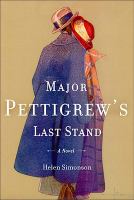
Major Pettigrew's Last Stand by Helen Simonson


Major Pettigrew’s Last Stand is a fantastic book about love, friendship and prejudice at any time in life, within any social status, anywhere in the world.  The character of Major Ernest Pettigrew is pretty much the stereotypical older English gentleman.  He’s classy, he’s respectful, he’s neat and tidy, he’s quiet and he’s not one to ever make a scene.  Enter Mrs. Jasmina Ali and her Pakistani background and ways and the Major finds his proper, sedate life turned upside down.  Right from the start, there is some chemistry between Mrs. Ali and the Major but because of both cultural and class prejudices (from the townspeople, from the Major’s son Roger and even from the Major himself), Mrs. Ali leaves the town, and the Major, behind.  What the Major does next leads to one of the best “adult” endings in fiction ever.  Very little in this book is trite or clichéd.  An excellent, mature read for all…not only for those in the twilight of their lives. 

Thursday, June 9, 2011

Hotel on the Corner of Bitter and Sweet by Jamie Ford

Set during both WWII and in the mid-1980s, Hotel on the Corner of Bitter and Sweet is an exceptional novel about a time in history American we are too willing to forget…the internment of Japanese Americans during the war. Set in Seattle, Hotel focuses around main character Henry, who is a young 12-year-old Chinese American boy in 1942, where much of the book takes place. During these historical chapters, he meets Keiko, a Japanese girl who is a second generation American. They both start out apprehensive of each other (Henry’s father loathes the Japanese) but eventually grow to care deeply for each other. When Keiko and her family, along with all of the other Japanese families, are rounded up and moved to camps set up by the American government, Henry is not only unhappy but confused…confused since Keiko is more American than he is. Keiko does not even speak Japanese. This contrasts with Henry’s background…where his parents speak only Chinese and they force him to speak only “his English.”
I really liked this novel. It has one of the best, most moving stories I’ve read. Ever. Now, mind you, I am not saying this is the best book I have ever read. Why? What is the difference between “best story” and “best book?” Simple: the way it was written. As I was reading Hotel, I found myself thinking about another book I had read that was also set in the Pacific Northwest about Japanese Americans: Snow Falling on Cedars by David Guterson. Even though Snow takes place AFTER WWII and Hotel focuses on events that happen DURING the war, I continued to make comparisons between the two while I was reading Hotel. Comparisons to the story and the location and the romantic elements…NOT comparisons to the writing. Guterson’s novel from 1994 is filled with lyrical prose that I remember submerging myself into and not wanting to escape from…vivid from page one to the end, brilliantly bringing to life an entire setting through the pages. The love story in Snow between the main characters is enhanced by the poetic words given to describe both them and their surroundings. Jamie Ford’s writing in Hotel is good…very good. It’s just not excellent. It’s the story in Hotel that you want to savor, not the prose. Had Ford brought to Hotel the expressive, inspired language Guterson used, Hotel might just have been a true literary masterpiece. But, having a minor masterpiece is still pretty good! It’s a great, page-turning read and a story that will stay with you long after the final page.

Friday, April 8, 2011

In a previous post, I spoke of all of the books I read on my iPad while on vacation. Here short reviews of the titles that I read:

Brett, Simon — The Body on the Beach – The first of Brett’s Fethering mysteries, this is a fun cozy mystery set in a smallish coastal town in the South of England. The two main characters become amateur sleuths as they investigate a body that one of them found on the beach.

Crombie, Deborah — Where Memories Lie – An intense mystery featuring Crombie’s English police team of Kincaid and James. This one involves a diamond brooch that was stolen by the Nazis and belongs to a woman who needs to get to the bottom of why people associated with the brooch are turning up dead.


Fielding, Joy — Missing Pieces – A page-turning thriller that also has its fair share of family drama. Married with teen kids, Kate is a therapist whose former flame has just reentered her life and sister is in love with a serial killer. As Kate’s home life continues to unravel, her sister makes some decisions that jeopardize all of their lives.


Keyes, Marian — Sushi for Beginners – Lisa finally gets the promotion she’s been waiting for…but it’s Dublin, Ireland…not NYC, where all the movers and shakers are. On the other hand, Ashling LOVES Dublin and her new job working for Lisa. As always with chick lit, there are several different men who add complication to the plot. LOTS of fun…as usual from Keyes.


Rendell, Ruth — Murder Being Once Done – Rendell’s Chief Inspector Wexford is at it once again…this time in London, where he’s recuperating after a heart attack. But Wexford doesn’t know the meaning of the word REST, especially when he stumbles into a case of multiple murders.


Wickham, Madeleine — The Gatecrasher – Wickham (who also writes under her pen name Sophie Kinsella) once again scores with a weightier, meatier tale than she writes as Kinsella. This time, she features a main character who crashes funerals, hoping the new widower will be wealthy. Vivid characters outshine Wickham’s plot…but still lots of fun!


Winspear, Jacqueline — A Lesson in Secrets – Winspear’s 8th outing with her continuing sleuth Maisie Dobbs, who’s a spunky young PI in England between WWI and WWII. This time, Maisie is undercover in a college when the principal is murdered. Dobbs then reveals her true identity as a detective and begins to solve the crime.

Thursday, April 7, 2011

Book Review from patron Caroline Szold-Goodman


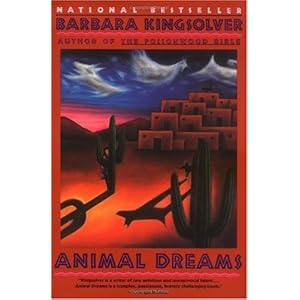
Animal Dreams by Barbara Kingsolver is a novel set in Grace, Arizona.  Codi and Hallie are the daughters of eccentric Doc Homer who watches them with great concern.  They are sweet and gentle girls.  Doc Homer insists they wear orthopedic shoes to their dismay. 
The stories take place during the revolution in Nicaragua.  Hallie joins the cause to help the people, not to fight, but to teach the children and to heal people.
Codi keeps looking back at her dreaded childhood.  She also has to keep track of Doc Homer who is sinking into dementia.  She doesn’t feel confident of herself.  Yet, as the story progresses, she becomes a fine teacher.  She concerns herself with the students.  Codi gives them sex education.  The class tests the nearby waters and finds the Ph is off the charts.  So they alert the town about the water problem.
The native citizens of Grace loved displays of religious objects.  “Some people had business with the saints on November 1, and went to Mass, but on November 2 ‘everybody’ had business at the graveyard.”
The intricacies of the Navaho, Apache, and other tribes are realistic. The romance is dreamy.  The writing is fantastic-a poetic journey ending in a paradise on earth.

Wednesday, August 11, 2010

A Vintage Affair by Isabel Wolff


Another great, fun story by Wolff, who is getting stronger and stronger as a storyteller. The writing is solid, but Wolff's forte is forming bright, vivid female characters who face their troubles head on with passion. A British native, Wolff's young career women all start off less than resilient but then end up conquering heroes. In this novel, Phoebe starts off by opening her new vintage fashion shop, fresh from a badly broken relationship and the death of her close friend. Through both events and a series of wonderful supporting characters, Phoebe comes into her own (her store being a success doesn't hurt either!)! In addition to the story and characters, I also enjoyed leaning about vintage haute couture. A must read for chick lit-ters and those who enjoy light, breezy women's fiction.

Monday, March 29, 2010

Too Much Money by Dominick Dunne


Entertaining book about high NYC society. The late Dunne (he passed away just after finishing this book) really captures the insiders view of society life perfectly, mostly because he was ONE OF THEM. So, the world he is writing about was really his own world. Silly in parts and the ending was too vague for me, mostly I enjoyed this romp through the lives of people I will never be allowed (or, for that matter, want to) socialize with.

Friday, October 2, 2009

One Fifth Avenue by Candice Bushnell


A peak into NYC society life, written by the author of the Sex and the City novel that started it all! Different than Sex in the City because there are a variety of people here from different generations and financial backgrounds. Bushnell gives us lots of colorful characters! And her writing style makes you feel like a voyeur reading it...getting a sneak peak into everyone’s social life. Ever wonder about the rich and famous? Or the not-so rich and famous? Well, if so, this is the book for you. A fun read!

Saturday, June 20, 2009

The Other Side of the Story by Marian Keyes


One of the more delightful surprises in fiction in recent years, this Keyes book was a beach read that turned out to be a little more than that. I’ve read quite a few of Keyes books before but this one is probably my favorite of hers…it’s fresh and engaging and simply delightful. Told from the POV of three London ladies: 1. Gemma, who has a neurotic mother and is still mourning the loss of her stolen-out-from-under-her-by-her-best-friend boyfriend…2. Lily, who is the best friend who stole Gemma’s boyfriend…and 3. Jojo, a literary agent who ends up representing both Gemma and Lily. I loved the way Keyes weaved all three stories together…yet giving each of the 3 enough space for us to get to know them all. Even though each change of character is marked with the ladies’ name before the chapter, towards the end, we knew each of the three enough to know whose part we were reading. A great way to tell a fun, entertaining story!