Saturday, May 4, 2013

The 100-Year-Old Man Who Climbed Out the Window and Disappeared by Jonas Jonasson


The idea of this book is great: a man who is about to have his 100th birthday party escapes from his retirement home and embarks on a series of hilarious and dangerous adventures.  And, for the most part, it is funny.  But, it is also told in two time periods…the present day (where the man is 100) and the past (where the man in younger but still having adventures).  I LOVED the present day parts.  They are well-written and VERY funny…sardonic, sarcastic, and very, very dark in its humor.  But, the flashbacks to the past are…part funny, part endearing, and part history lesson.  After a while, all of the histrionics of the flashbacks begins to take its toll.  I wanted more (all) of the present day story.


The flashbacks play out more like Being There (the film and originally the Jerzy Kosinski book) and Forrest Gump…where the man, Allan and his life and works alter segments of history, such as Los Alamos, actual events in China, North Korea, etc., where he seemed to have no trouble affecting international politics just by being himself.  Aside from being in the “thick” of things politically (President Truman was a good friend), Allan was also high adventurous and enterprising as a young man (he walked back to his homeland of Sweden over the Himalayas after his involvement in the Far East was over.  So, the flashbacks part was a overly unbelievable and less funny than the antics of the 100-year-old Allan and his group of misfits.  These misfits include a thief who befriends Allan shortly after his “escape” from the retirement home, a hot dog cart owner (who also has a car that comes in handy), a home owner who just happens to own the house Allan and his crew stumble upon (the home owner is also the owner of a stolen/found elephant), and eventually a crime lord.  If you want a funny, lively and truly entertaining read, try this one.  Skim the flashbacks (they are funny in parts…just too long) but savor the present-day adventures of a 100-year-old man. 

Monday, April 22, 2013

Yellow Birds by Kenvin Powers vs. Gone Girl by Gillian Flynn


These two books have several things in common:
·         Narrators are unreliable.
·         The main characters are psychopaths or behave like psychopaths under their circumstances.
·         The main characters do not possess a moral compass.
·         There is no resolution of the conflict faced by the protagonists.
·         These two books were very difficult for me to read. I wanted each of them to be finished sooner, but unfortunately both needed to be as long as they were.
·         Both books are award nominees. The Yellow Birds was a National Book Award Finalist and Gone Girl is nominated for an Edgar Award.

The Yellow Birds is conflicted in its voice – our narrator sounds like a soldier when he speaks with other soldiers, but sounds like a poet in all his description and contemplation. These two don’t fit together for me. That being said the book is a good read if you want to hear the painful garbled confession of a combat soldier. I have known several soldiers who have told me their very difficult stories of what occurred while they were deployed. Their stories, like Bartle’s in Yellow Birds, brought me to tears.  Like Bartle, they too found life after combat a very difficult adjustment.

Gone Girl is a real page turner and reads like marriage gone badly under the hands of Alfred Hitchcock. I felt totally manipulated and occasionally strangely delighted with the author’s dark wit. Her description of character behavior in so many situations is startlingly accurate and perfectly described.  Most of the characters are quite despicable. While I hate the story, I find the book to be very well written and I choose it over Yellow Birds for that reason.   Ruth Schuster


Thursday, April 18, 2013

2013 Pulitzer Prize Winner for Fiction


For distinguished fiction by an American author: 


Awarded to The Orphan Master's Son by Adam Johnson, an exquisitely crafted novel that carries the reader on an adventuresome journey into the depths of totalitarian North Korea and into the most intimate spaces of the human heart.


Finalists:

Also nominated as finalists in this category were: "What We Talk About When We Talk About Anne Frank," by Nathan Englander (Alfred A. Knopf), a diverse yet consistently masterful collection of stories that explore Jewish identity and questions of modern life in ways that can both delight and unsettle the reader; and "The Snow Child," by Eowyn Ivey (Reagan Arthur/Little, Brown), and enchanting novel about an older homesteading couple who long for a child amid the harsh wilderness of Alaska and a feral girl who emerges from the woods to bring them hope.

Tuesday, April 2, 2013

The Chaperone vs The Flight of Gemma Hardy

By Dodie

THE CHAPERONE by Laura Moriarty:  This work of historical fiction is set in Wichita, Kansas in 1922. The reader is pulled right into this era with all of the period details - orphan trains, Prohibition, Flappers, and the onset of the Depression.  Cora Carlisle, aged 36 and a rather ordinary Wichita housewife, agrees to be the unlikely chaperone for 15 year-old Louise Brooks who is headed to New York to attend a summer session with the prestigious Denishaw School of Dancing.  (Readers might recognize the name of Louise Brooks who goes on to be a silent star in the early years of the movie industry.) This journey changes the lives of both women - in totally unanticipated ways. Two very different women - one a middle-aged empty nester and the other an adolescent on the brink of coming into her own life - find the answers they're looking for in New York City. This book looks at the myriad assortment of family relationships and their impact on the two characters' lives.  

Cora is a character I fell in love with. It was fascinating to see how her life played out. She was an admirable woman who managed to live a full life despite her many hardships. This book IS about "The Chaperone".  

THE FLIGHT OF GEMMA HARDY by Margot Livesey: This book is also historical fiction - set in the 1950's and 60's in Iceland and Scotland. Several reviews of this book call it a "re-inventive imagining of the classic, JANE EYRE."  It was a beautifully written book that I could not put down - for most of the book. However, as a reader, I simply could not go along with all of the many twists and turns that the author built into the plot. I could barely make myself finish the book because of this. 

I loved the story-line. Gemma Hardy becomes an orphan at 3 when her Icelandic fisherman father drowns at sea. Her kind Scottish uncle becomes her guardian and welcomes her into his family. Gemma enjoys an ordinary life with her adopted family until her uncle passes away. Overnight, circumstances change for the worse for Gemma and she is suddenly hated, resented, and ostracized by her Aunt and cousins. At barely 10 years old. she is sent off as a "working girl" to a private boarding school. When that school goes bankrupt, she is forced to take on a job as an au pair on Orkney Island for the forlorn 8-year-old niece of Hugh Sinclair - a London businessman and owner of the remote Blackbird House.  Gemma's life takes off and circumstances at the Blackbird House cause her to deal with relationships and ensuing "flights" that are rather challenging for an orphan with such a hardscrabble life. 

The beautiful prose and the magic realism of this book - set against the backdrop of Scotland and Iceland - made this a wonderful read. All was spoiled for me as the book neared its end. I simply could not accept the way the author developed the character of Gemma Hardy.  

WINNER: THE CHAPERONE 

This marks the end of the first round of the Niles Tournamant of Books. Of the twelve books that entered the contest, six remain:

Arcadia
The Yellow Birds
Beginner's Goodbye
Round House
Gone Girl
The Chaperone

In the first contest of round two, Donna considers Arcadia against The Yellow Birds.

Thursday, March 28, 2013

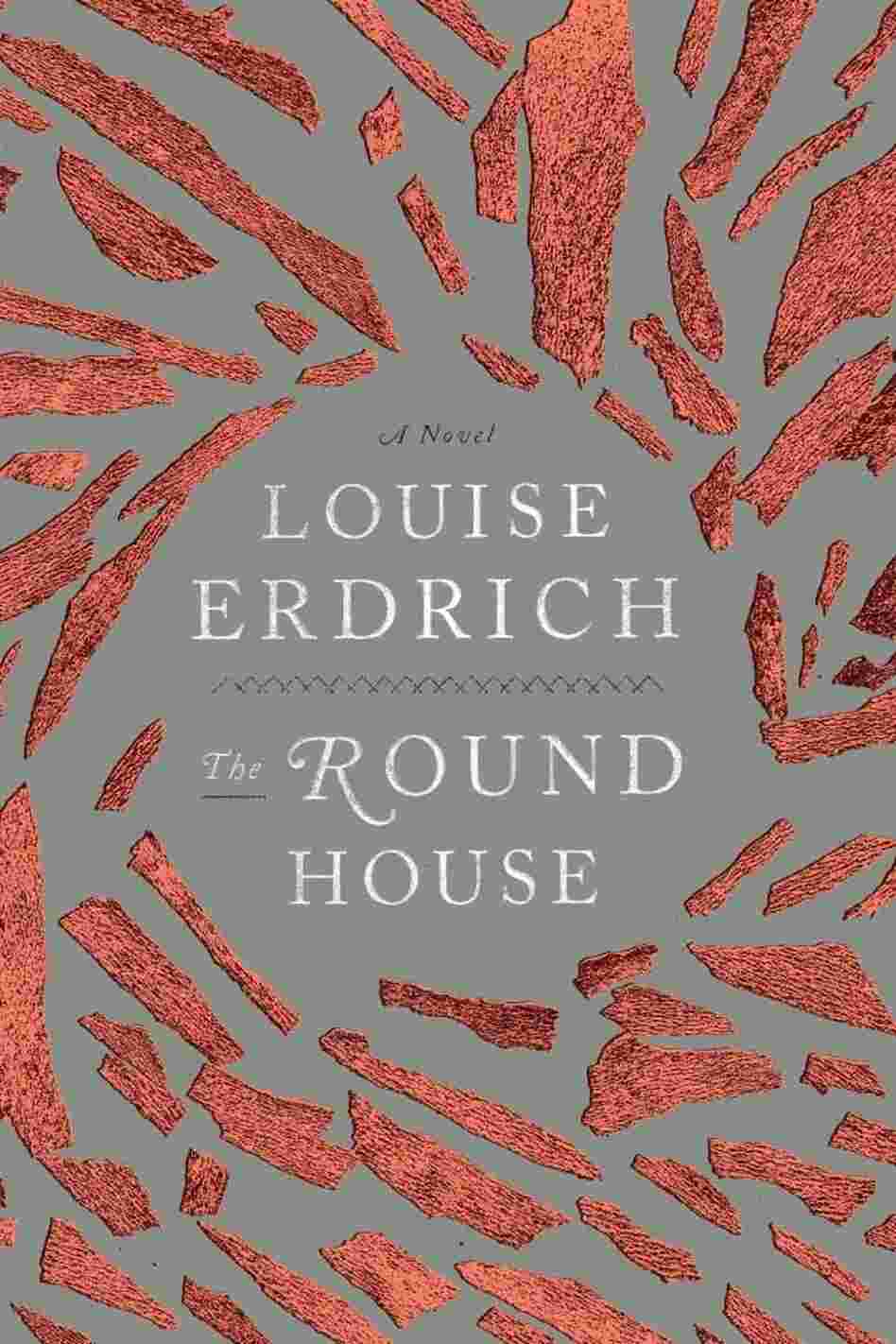
A Killing in the Hills vs The Round House

By Cyndi:


A Killing in the Hills is Pulitzer Prize-winning journalist Julia Keller's first novel, uhmmm. For a would-be thriller, the extensive character development and backstory was a distracting drag. I started skimming pages because of the implausible yet predictable plot. Prosecutor Bell Elkins, a single mom and her teen daughter take on an illegal drug ring thats already pulled off a Capone-style massacre of three senior citizens in the hills of West Virginia. It was a chore to get through.

By contrast, Louise Erdrich's The Round House, pulled me in from page one. Being swept up by a good story is a great reading experience. Take the book as it comes- no preconceptions, anticipations or expectations. So here's my review without revealing the plot, which is only a google away, if you like to know beforehand. This, her fourteenth novel is uncharacteristically suspenseful made more so by my ignorance of the legal quagmire around tribal lands. There were twists and turns, dead ends and red herrings along the way.  It was hard to put down.

Therefore, The Round House wins round one.


Wednesday, March 27, 2013

Friends Like Us vs Gone GIrl

Today Darlene considers Friends Like Us, an example of chick lit with depth, against Gone Girl, a black-comedic mystery.


While these books don’t seemingly have much in common, they both have characters that are awful, horrible people.  All of them are just so unlikeable which made the reading a real chore.

I don’t want to give too much away about Gone Girl.  Amy Dunne disappears on her fifth wedding anniversary.  Police suspect foul play and all fingers point to her husband, Nick.  There are many twists and turns, but even so I found the book to be too predictable.  The book would have made a decent plot for an episode of Law and Order: Criminal Intent.  Amy Dunne also had too many things in common with Brenda Chenowith from Six Feet Under to be an original character.  And I don’t want to give anything away for the people who haven’t read the book, but what was that ending?  All that said, I though the writing was well paced and the book was a page turner. 

Gone Girl: Predictable.  Decent writing.  Fell apart at the end.

Friends Like Us is one pun after another.  I believe the author was trying to be quirky and fun but I found it more annoying than anything.  Willa reconnects with her high school best friend Ben (who was madly in love with her, by the way) at their 8th year class reunion (yes there is a story behind that, but who cares?).  Ben falls in love with her best friend and they become engaged after six months.  The threesome are BFF’s who do things like go mattress shopping together until Willa decides to sabotage Jane and Ben’s relationship.  I honestly think this may have been one of the worst book I have ever read.

Friends Like Us:  Horrible characters and horrible writing filled with puns.

I would rather have Amy Dunne as my BFF than Willa or Jane or Ben. They are all terrible, at least she has half a personality.
Winner: Gone Girl


In tomorrow's match Cyndi pits A Killer in the Hills against The Round House.


Tuesday, March 26, 2013

The Anatomist’s Apprentice by Tessa Harris

Lord Crick has died. While convulsing. And turning yellow. And providing his family with a gruesome corpse. Although young Lord Crick had some health issues (i.e. the pox) and a rather nasty disposition, it really was a ghastly and horrific death. His sister Lady Lydia decides that there must be a further investigation. The gossip against her husband Captain Flynn, who is her brother’s heir, is becoming scandalous. On the advice of her cousin Francis, she travels to London to meet with Dr. Thomas Silkstone, an American physician who is working, studying and teaching with British anatomist Dr. Carruthers. Silkstone, who is quite taken with Lady Lydia, agrees reluctantly to exhume and examine the corpse and answer questions at the inquest.

When he is at the estate, he finds not just a house in mourning, but a household full of secrets. Silkstone uses his primitive forensic and toxicology skills to study the remains, but he finds more questions than answers, and his list of suspects in the household grows.  The tension swells, and the plot twists,  but will Silkstone (with some help from Carruthers,) find the answers with his scientific methods before there is another body found on the estate? Harris writes a layered tale of forensic mystery using engaging characters who struggle with the conventions of their time. Silkstone is wonderful as the outsider looking into their society. Can't wait to read the next one in the series!

The Anatomist’s Apprentice by Tessa Harris