Thursday, March 28, 2013

A Killing in the Hills vs The Round House

By Cyndi:


A Killing in the Hills is Pulitzer Prize-winning journalist Julia Keller's first novel, uhmmm. For a would-be thriller, the extensive character development and backstory was a distracting drag. I started skimming pages because of the implausible yet predictable plot. Prosecutor Bell Elkins, a single mom and her teen daughter take on an illegal drug ring thats already pulled off a Capone-style massacre of three senior citizens in the hills of West Virginia. It was a chore to get through.

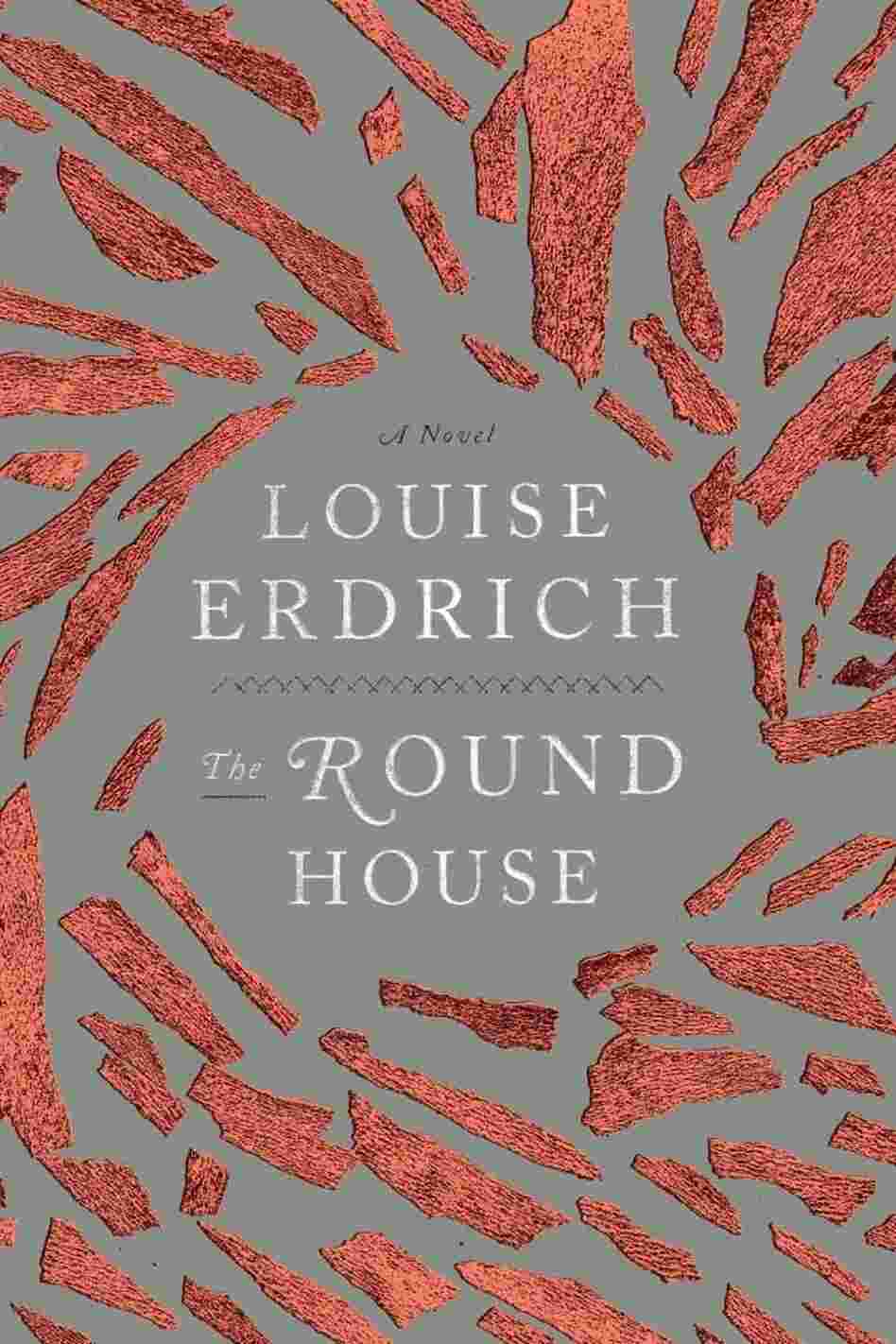
By contrast, Louise Erdrich's The Round House, pulled me in from page one. Being swept up by a good story is a great reading experience. Take the book as it comes- no preconceptions, anticipations or expectations. So here's my review without revealing the plot, which is only a google away, if you like to know beforehand. This, her fourteenth novel is uncharacteristically suspenseful made more so by my ignorance of the legal quagmire around tribal lands. There were twists and turns, dead ends and red herrings along the way.  It was hard to put down.

Therefore, The Round House wins round one.

Wednesday, March 27, 2013

Friends Like Us vs Gone GIrl

Today Darlene considers Friends Like Us, an example of chick lit with depth, against Gone Girl, a black-comedic mystery.


While these books don’t seemingly have much in common, they both have characters that are awful, horrible people.  All of them are just so unlikeable which made the reading a real chore.

I don’t want to give too much away about Gone Girl.  Amy Dunne disappears on her fifth wedding anniversary.  Police suspect foul play and all fingers point to her husband, Nick.  There are many twists and turns, but even so I found the book to be too predictable.  The book would have made a decent plot for an episode of Law and Order: Criminal Intent.  Amy Dunne also had too many things in common with Brenda Chenowith from Six Feet Under to be an original character.  And I don’t want to give anything away for the people who haven’t read the book, but what was that ending?  All that said, I though the writing was well paced and the book was a page turner. 

Gone Girl: Predictable.  Decent writing.  Fell apart at the end.

Friends Like Us is one pun after another.  I believe the author was trying to be quirky and fun but I found it more annoying than anything.  Willa reconnects with her high school best friend Ben (who was madly in love with her, by the way) at their 8th year class reunion (yes there is a story behind that, but who cares?).  Ben falls in love with her best friend and they become engaged after six months.  The threesome are BFF’s who do things like go mattress shopping together until Willa decides to sabotage Jane and Ben’s relationship.  I honestly think this may have been one of the worst book I have ever read.

Friends Like Us:  Horrible characters and horrible writing filled with puns.

I would rather have Amy Dunne as my BFF than Willa or Jane or Ben. They are all terrible, at least she has half a personality.
Winner: Gone Girl


In tomorrow's match Cyndi pits A Killer in the Hills against The Round House.


Tuesday, March 26, 2013

The Anatomist’s Apprentice by Tessa Harris

Lord Crick has died. While convulsing. And turning yellow. And providing his family with a gruesome corpse. Although young Lord Crick had some health issues (i.e. the pox) and a rather nasty disposition, it really was a ghastly and horrific death. His sister Lady Lydia decides that there must be a further investigation. The gossip against her husband Captain Flynn, who is her brother’s heir, is becoming scandalous. On the advice of her cousin Francis, she travels to London to meet with Dr. Thomas Silkstone, an American physician who is working, studying and teaching with British anatomist Dr. Carruthers. Silkstone, who is quite taken with Lady Lydia, agrees reluctantly to exhume and examine the corpse and answer questions at the inquest.

When he is at the estate, he finds not just a house in mourning, but a household full of secrets. Silkstone uses his primitive forensic and toxicology skills to study the remains, but he finds more questions than answers, and his list of suspects in the household grows.  The tension swells, and the plot twists,  but will Silkstone (with some help from Carruthers,) find the answers with his scientific methods before there is another body found on the estate? Harris writes a layered tale of forensic mystery using engaging characters who struggle with the conventions of their time. Silkstone is wonderful as the outsider looking into their society. Can't wait to read the next one in the series!

The Anatomist’s Apprentice by Tessa Harris 

Monday, March 25, 2013

Beginner's Goodbye vs Lightning Rods

Yesterday's post was by Barb P. Today Cecilia tackles Anne Tyler's Beginner's Goodbye vs Helen DeWitt's Lightning Rods.

First of all, I am already an Anne Tyler fan.  So, I knew I would be biased in her direction.  But, after reading both, there is no comparison in which one I prefer, Tyler bias or not.  

With The Beginner's Goodbye, Anne Tyler once again captures the heart and soul of someone going through a trying time. This time, it's Aaron...who lives an unremarkable life with an unremarkable woman...Dorothy.  But, after Dorothy's sudden death, Aaron's period of adjustment offers more than just grief and depression.  He simply cannot let Dorothy go. This is a touching, sweet book that is filled with heart and emotion.  I found myself laughing at Aaron more than once...whether this was intentional humor on Tyler's part... just the sad-sack, vulnerable ways of Aaron manifesting themselves as comic moments I do not know.  I would like to think that Tyler wanted us to laugh at him a little...so he and her reader's would try and take life a little less seriously.  Tyler, who is known for her engaging and emotive character studies, really captures the soul of this wayward man.  I would be hard pressed to say it is Tyler's best work but it is one of her most engaging.

On the flip side, you have Helen Dewitt's Lightning Rods. Comparing the Dewitt book with the Tyler book is like comparing avocados and apples.  NOT MUCH SIMILARITY.  Dewitt's book is a statement book about state of sexual harassment and general sexual tensions in the workplace.  I would call it a satire, but it not told in usual "satire" form...with a wink and a nudge.  This story is told with seriousness and devoid of any humor, which makes it all the more tough to read and even stomach.  Now, I do not consider myself any type of a prude and I do understand what the author is trying to say here (I guess) but this commentary on the state of workplaces, sex and male-female relationships just did not sit right with me.  In trying to be witty and edgy, Dewitt just becomes crude and inane. 

The clear winner here is THE BEGINNER'S GOODBYE by ANNE TYLER.  


So far, the books that are moving forward are Arcadia, The Yellow Birds, and The Beginner's Goodbye. Tomorrow Darlene takes up Friends Like Us vs Gone Girl.


Sunday, March 24, 2013

The Casual Vacancy vs Yellow Birds


The Casual Vacancy    VERSUS   The Yellow Birds 
Personally, I did not care for either book.  J. K. Rowling should stick to writing children’s books. Kevin Power’s book has been favorably compared to The Things They Carried by Tim O’Brien.  For me, it doesn't even come close. If you want to read a classic about war and the human condition, read the book by Tim O’Brien.  I think it is excellent. However, I will discuss the two books I was assigned by using a Pro/Con list.
CASUAL VACANCY:  A story that takes place in a small town in England with a story line that drags in the ugliest of human behaviors as the town council strives to find a replacement for a vacant council seat. This is Rowling’s first novel for adults.  
PROS:  ummmmmm, oh yeah, it was full of dry Brit-Com humor. Rowling’s a good writer. She is a sharp observer of social behaviors.
CONS:  The book is 512 pages!!.  There were 15 or more different characters.  It was difficult to remember them all, and I personally did not care about what happened to any of them. The ending was predictable and somewhat heavy-handed.  I skipped through a chunk of it.

YELLOW BIRDS:  Told in the words of a young private in the army who is serving a tour of duty in Iraq. The story focuses on his friendship with another young private and their daily struggle to stay alive amidst the horrors of war.
PROS:  The author had spent time in the military in Iraq, so the story felt real and somewhat like his memoir.  One cares about what happens to the characters, although one does not really get to know them that intimately.  Well written.  A brisk, brief writing style which I personally enjoy.  It was only 240 pages, so a quick read. 
CONS:  Hey, it’s about war, so it was seriously depressing.  The story at times reads as somewhat disjointed and rambling. “Lost my way” a couple times during my read.

To reiterate, I did not care for nor would I recommend either book.  However, since I am required to choose one, 

The Winner is

Yellow Birds


Tomorrow's contest is between Beginner's Goodbye and Lightning Rods by judge Cecilia.

Saturday, March 23, 2013

Tournament of Books: First Contest


Arcadia vs The Orchardist


Arcadia and The Orchardist have certain things in common. Both are stories of American history. Each focuses on a dramatic historical movement. The Orchardist is about pioneers settling the west, in this case the far western United States. Arcadia represents the twilight of the Utopian movement that started in the nineteenth century, and besides a few exceptions like the Amish, ended in the hippie communes of the 1960s and 70s where Arcadia is set. 

 Both novels are organized around one main protagonist. Arcadia is tightly bound to Bit Stone, the first child born in Arcadia. Arcadia is seen only through Bit's point of view. The Orchardist centers its narrative around  the orchard keeper William Talmadge but moves among other viewpoints, most notably that of Della Michaelson, a teen-aged foundling who settles on Talmadge's property, and her niece Angelene, Talmadge's foster daughter.

The Orchardist follows Talmadge from childhood, when his restless mother drags him and his sister to a patch of land in Washington state and begins to cultivate the land. Talmadge grows up to become the orchardist, never leaving his land which he has made into a productive fruit farm. His life and his love is the orchard until two pregnant teen-aged sisters, runaways from an abusive brothel-keeper, find shelter with him.

The characters in The Orchardist are larger than life. Talmadge seems almost a force of nature, especially as described in the novel's opening: "His face was as pitted as the moon...(h)is ears were elephantine...the flesh granular like the rind of some fruit." (Is this passage overwritten? Yes, especially in the clipped, portentous tone.) The other main characters are similarly huge. Talmadge's Nez Pearce friend, Clee and his neighbor Caroline, who helps him with the sisters, are all wisdom and kindness; Della is monumentally damaged by her abusive childhood, and her abuser, Michaelson, is monumentally evil. Other characters, like Jane, Della's sister, figure importantly into the story, but are barely sketched in.

Yet despite this imbalance and stiffness there remains something compelling in the story of the American west, a romance that never wears thin. So in the intensity and bigness of this book, first-time novelist Amanda Copin has contributed something to our communal story.

At first glance Lauren Groff's Arcadia seems overwritten too. But you come to see that the tone reflects the overheated and naive world view of the Arcadians themselves. "May they rot in their bourgeois capitalist hell" says Bit's mother, Hannah. Bit imagines the world outside of Arcadia: "Humans out there are grotesque: Scrooges and Jellybys and filthy orphans... a blight called television like tiny Plato's caves in every room."  Groff turns out to be a skillful writer, letting us see the overview of Arcadia's life span as a community at the same time as she brings all of the characters and details to life. The pleasure of reading Arcadia is in Bit's close observations of himself and his world, given words lacking to the child  by the Bit-omniscient narrator. The narrator's interpretation of Bit's consciousness is convincing.

The plot of Arcadia follows the birth and death of the commune. At first everyone, including Bit's parents Hannah and Abe, embrace the communal ideal under Handy, the charismatic leader of Arcadia. Gradually, over the course of Bit's growing up, things unravel, drugs suck up a lot of energy, and rebellious newbies make a mess. We leave Bit at the commune in his teens and, in the last sections of the novel we pick up and follow him as an adult as he adjusts to life outside and reconciles with the remnant of the commune that he carries with him. The very last section takes place in the near future when a flu-like epidemic has taken over the United States. Perhaps this goes on too long, and the meaning of the epidemic and how it fits into the novel remain unclear to me.

Despite this last puzzle, and for greater mastery of language, detail, and character the winner of round one is

Arcadia

Arcadia will make it into the second round of judging. The next contest in the first round is Casual Vacancy vs Yellow Birds, judged by Barb P. Look for that tomorrow.

The Obituary Writer by Ann Hood

A riveting and ominous tale of loss, love and heartbreak set in both 1919 and the early 1960s.  The 1919 story involves a past love who most likely perished in the 1906 San Francisco earthquake and a woman, Vivian, who cannot get over her loss.  Vivian is "the kept woman" to David, a married man who might or might not leave his wife for her.  The earthquake ends whatever future they might have, but Vivian is determined to find him and she is still hoping for a passionate, heartfelt reunion all the way until 1919, when she finds out the truth. 

Tying in with that is the tale of Claire, a 1960s housewife who sees her love for her husband and the life she has made for herself slipping away.  It's not that she's powerless to do anything about it...it's just that she is unsure whether she wants to stop her sedate, mundane life from slipping out of control.  Her story is set during the inauguration of President Kennedy in early 1961; she looks to Jackie Kennedy as an icon for beauty, stability and class.  As President Kennedy and Jackie's story sets out, her own story begins to crumble...including her husband walking in on her affair with another married man and then her pregnancy by either her lover or her husband. 

At first, I could not see how these two stories would intersect but as the stories progressed, Hood sets up patterns of misery and disillusionment in each woman that is so compelling that really doesn't matter.  And then with the connection between 1961 and 1919 is revealed, it is believable and natural.  I've read most every novel (she also writes some nonfiction) Hood has written and to the best of my memory, this is the first time she has set a novel in two different time periods (usually, her novels involve one main character (usually female) with her own set of issues and concerns).  Well, for a first time out, the concept works, bringing to life both women, both of their worlds and both of their fully fleshed out emotional struggles.  The vibrancy and passion in the writing helps us to both visualize and sympathize with both ladies' tales of pain.  A lesser writer would have had trouble creating sympathetic characters out of two adulteresses, but Hood's careful attention to the character's inner turmoils allow us to not only sympathize with the two ladies, but possibly even relate to them.